基础入参对象
1
2
3
4
| @Data
public class DemoNoAnnotation {
private Date nowTime;
}
|
1
2
3
4
5
| @Data
public class DemoWithAnnotation {
@DateTimeFormat(pattern = "yyyy-MM-dd HH:mm:ss")
private Date nowTime;
}
|
1
2
3
4
5
6
| @Data
public class DemoWithResponse {
@DateTimeFormat(pattern = "yyyy-MM-dd HH:mm:ss")
@JsonFormat(pattern = "yyyy-MM-dd", timezone = "GMT+8")
private Date nowTime;
}
|
1
2
3
4
5
| @Data
public class DemoOnlyResponse {
@JsonFormat(pattern = "yyyy-MM-dd HH:mm", timezone = "GMT+8")
private Date nowTime;
}
|
case1:
1
2
3
4
| @PostMapping("/testZero")
public DemoNoAnnotation testZero(DemoNoAnnotation demoTest) {
return demoTest;
}
|
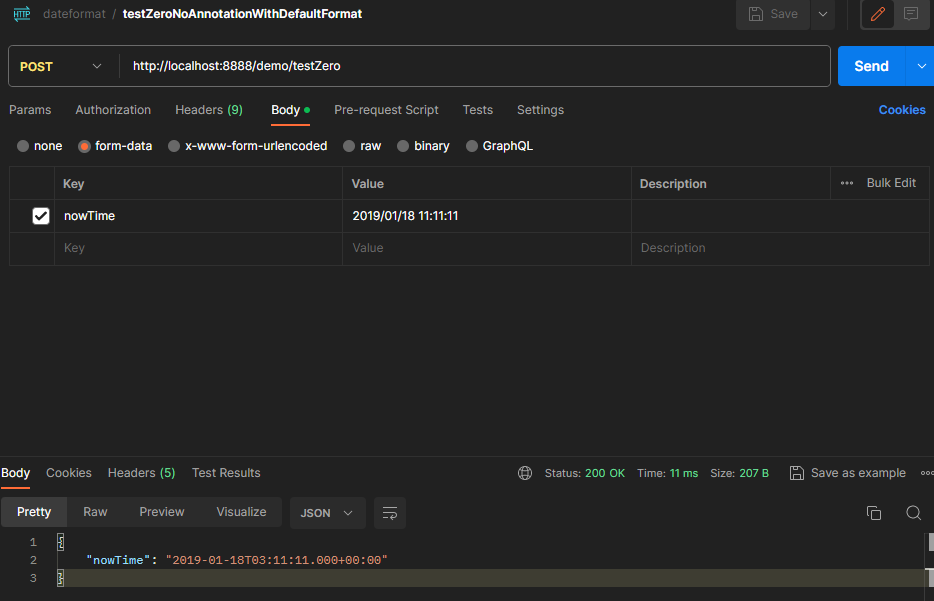
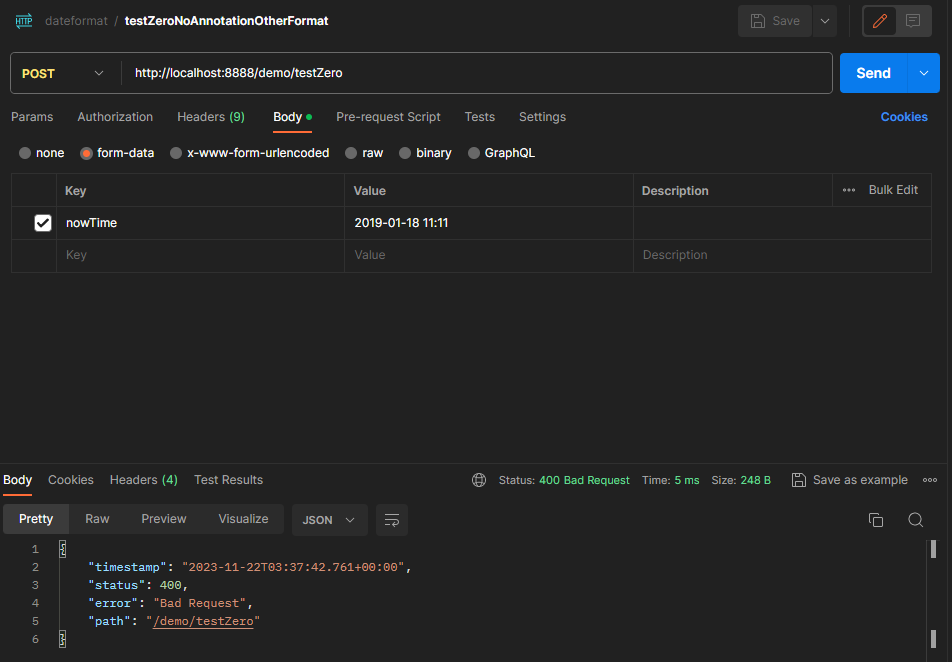
post方式,form-data传参,方法入参没有添加@ResponseBody。
这种情况下,只接受 格式为 yyyy/MM/dd HH:mm:ss 的时间参数。
case2:
1
2
3
4
| @PostMapping("/testOne")
public DemoWithAnnotation testOne(DemoWithAnnotation demoWithAnnotation) {
return demoWithAnnotation;
}
|
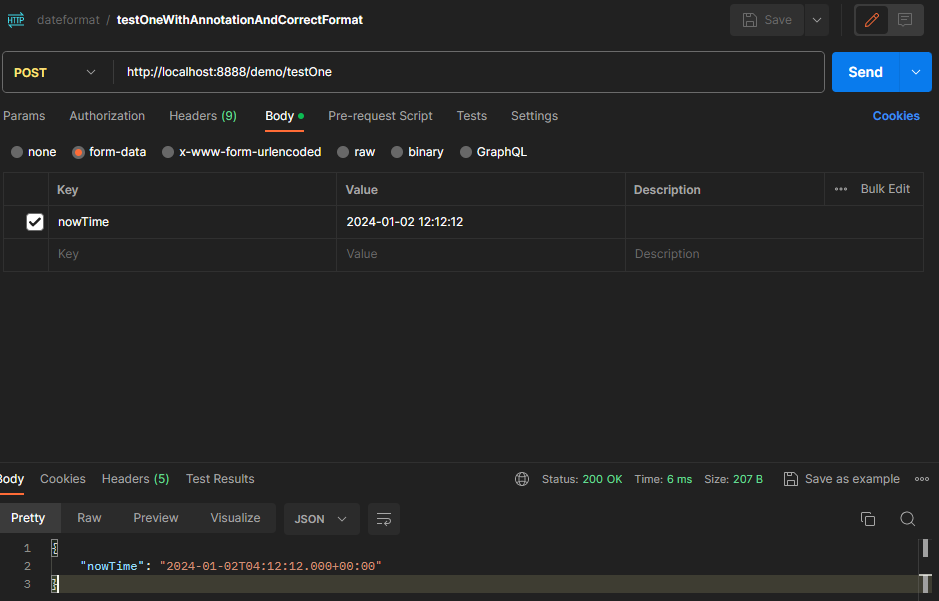
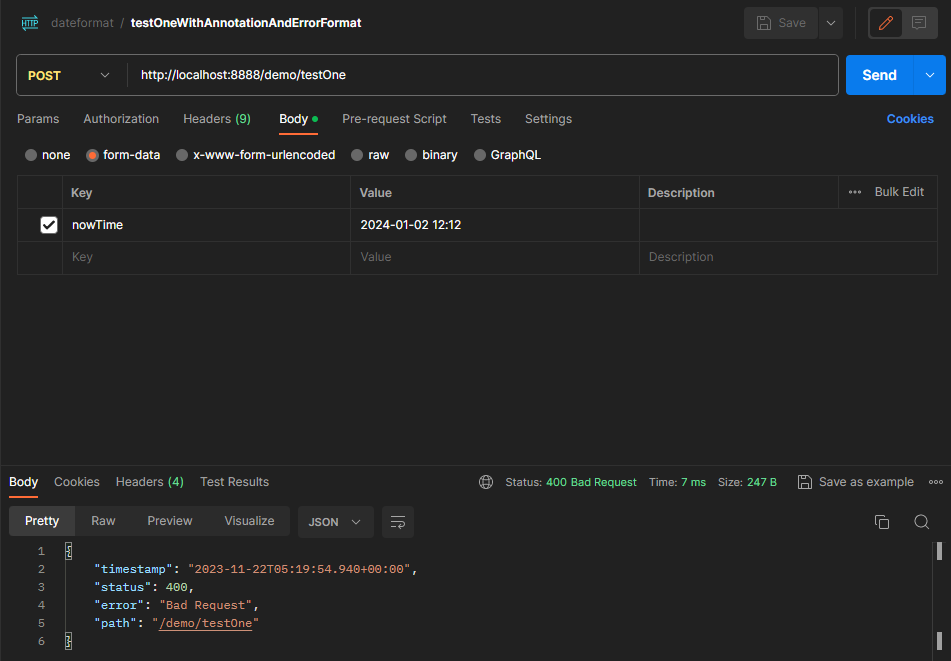
post, form-data,没有@ResponseBody,有@DateTimeFormat注解
时间的入参格式必须和注解上的一致才可以。
case3:
1
2
3
4
| @PostMapping("/testTwo")
public DemoWithAnnotation testTwo(DemoWithAnnotation demoWithAnnotation) {
return demoWithAnnotation;
}
|
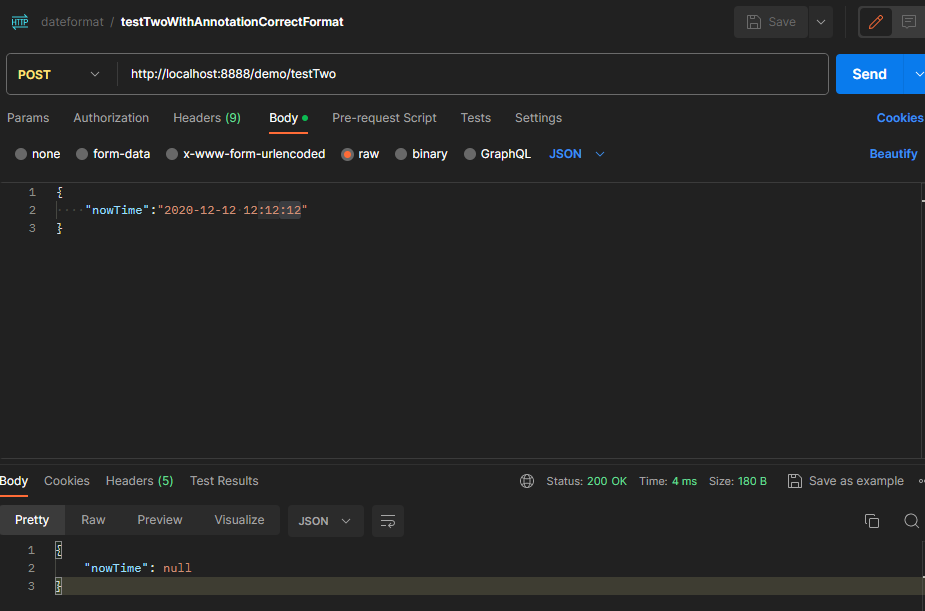
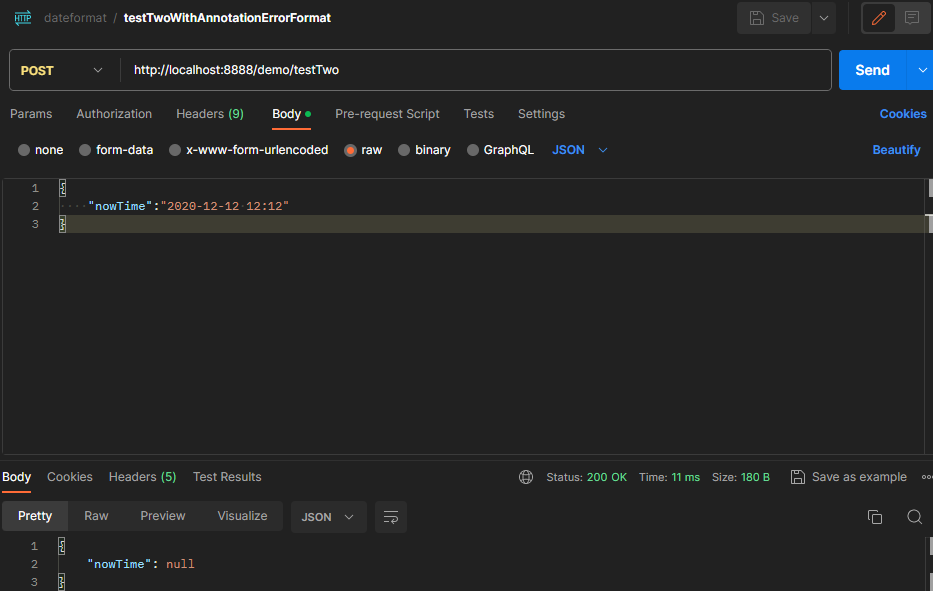
post, json 传参,没有@ResponseBody注解,标有@DateTimeFormat注解
无论是否按照@DateTimeFormat注解的格式进行传参,服务器都不会进行转换这个参数。
case4:
1
2
3
4
5
| @PostMapping("/testThree")
public DemoWithAnnotation testThree(@RequestBody DemoWithAnnotation demoWithAnnotation) {
System.out.println("demoTest = " + demoWithAnnotation);
return demoWithAnnotation;
}
|
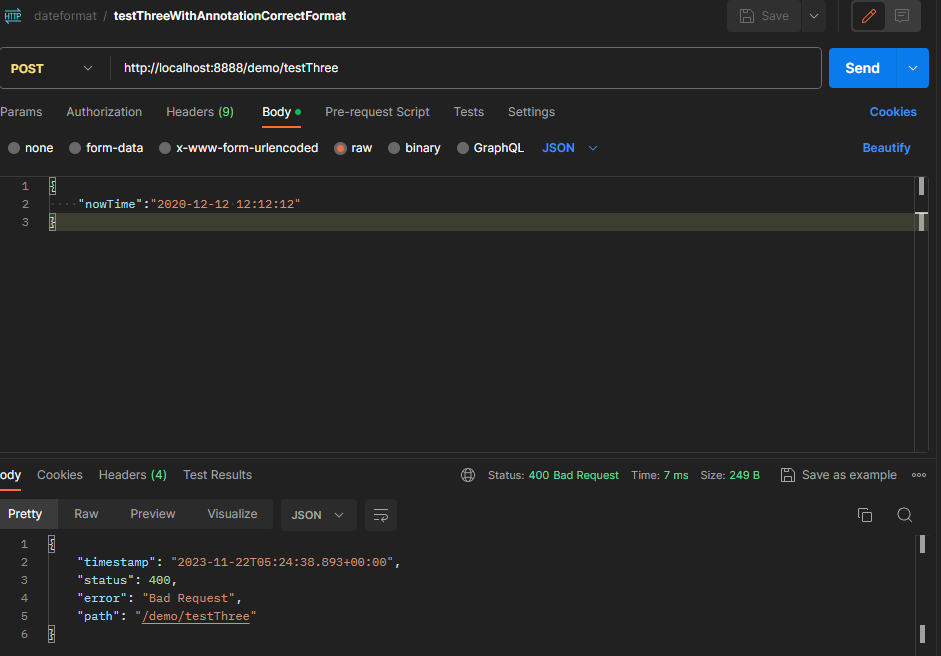
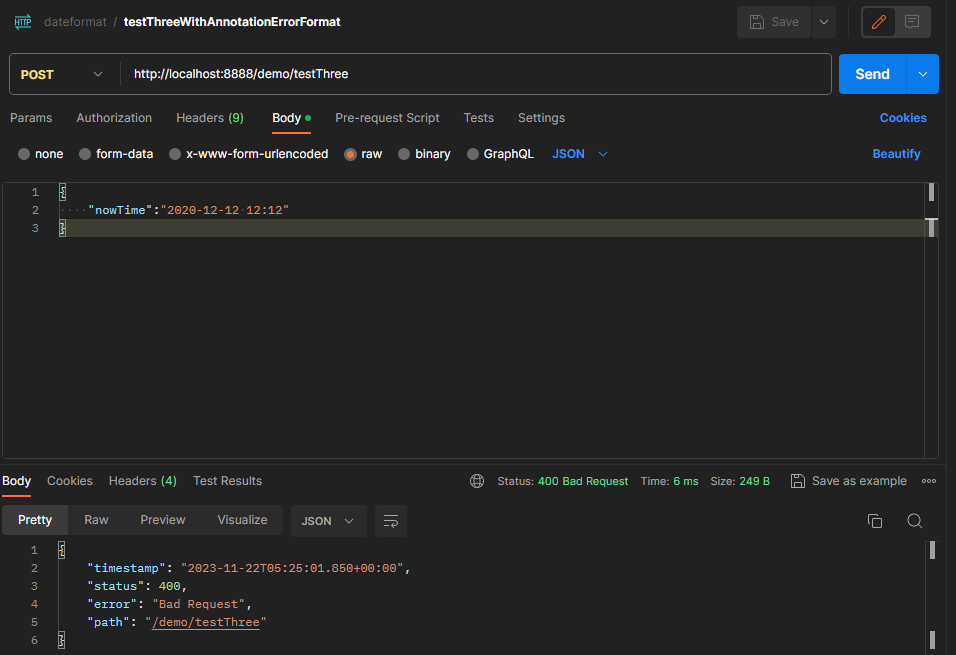
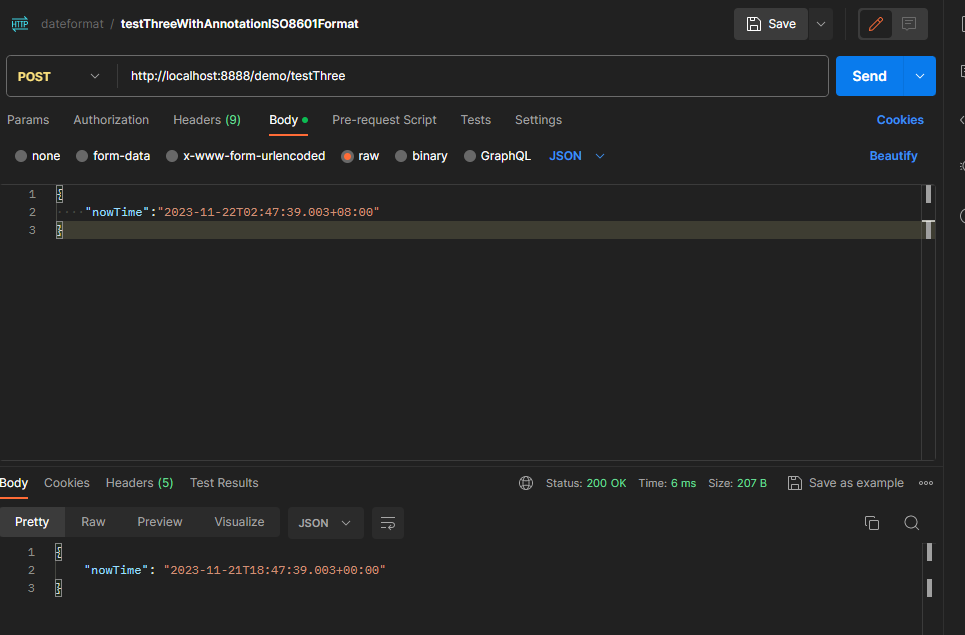
有@ResponseBody注解,有@DateTimeFormat注解,post,json
这个时候,@DateTimeFormat注解其实是失效的。前面的两个方式报错,是因为@ResponseBody在尝试解析这个参数,但是解析失败了。
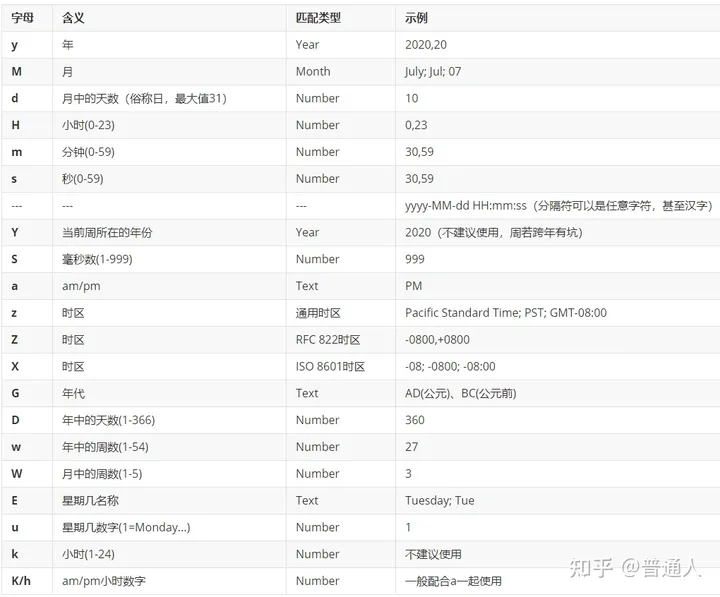
这个时候,默认接受的时间格式是:ISO8601 的时间格式:
yyyy-MM-dd’T’HH:mm:ss.SSSXXX
yyyy-MM-dd’T’HH:mm:ss.SSSXX
yyyy-MM-dd’T’HH:mm:ss.SSSX
也就是:
2023-11-22T02:47:39.003+08:00
2023-11-22T02:47:39.003+0800
2023-11-22T02:47:39.003+08
case5:
1
2
3
4
5
| @PostMapping("/testFour")
public DemoWithResponse testFour(@RequestBody DemoWithResponse demoTest) {
System.out.println("demoTest = " + demoTest);
return demoTest;
}
|
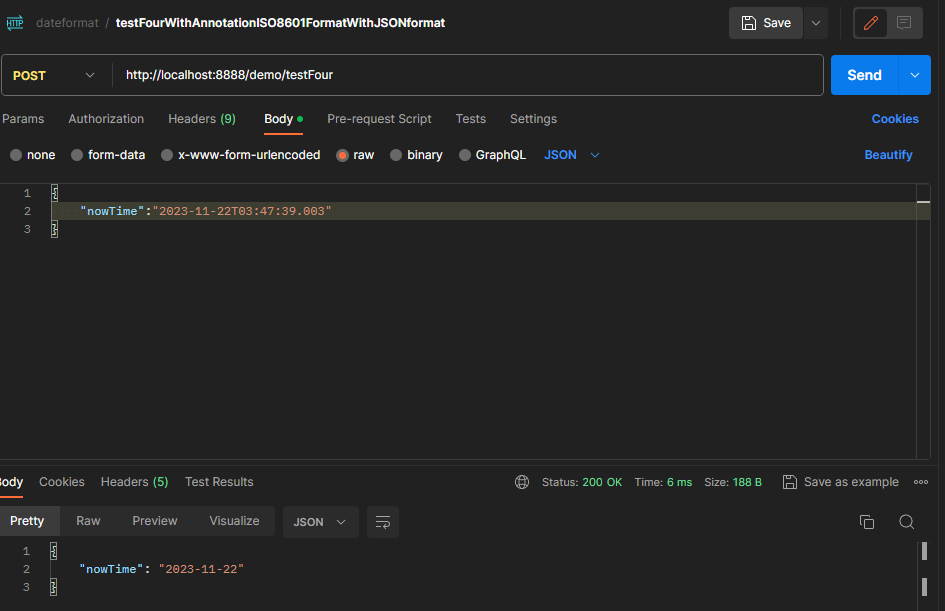
有@ResponseBody返回值的参数是正确解析了的。
case6:
1
2
3
4
5
| @PostMapping("/testFive")
public DemoWithResponse testFive(DemoWithResponse demoTest) {
System.out.println("demoTest = " + demoTest);
return demoTest;
}
|
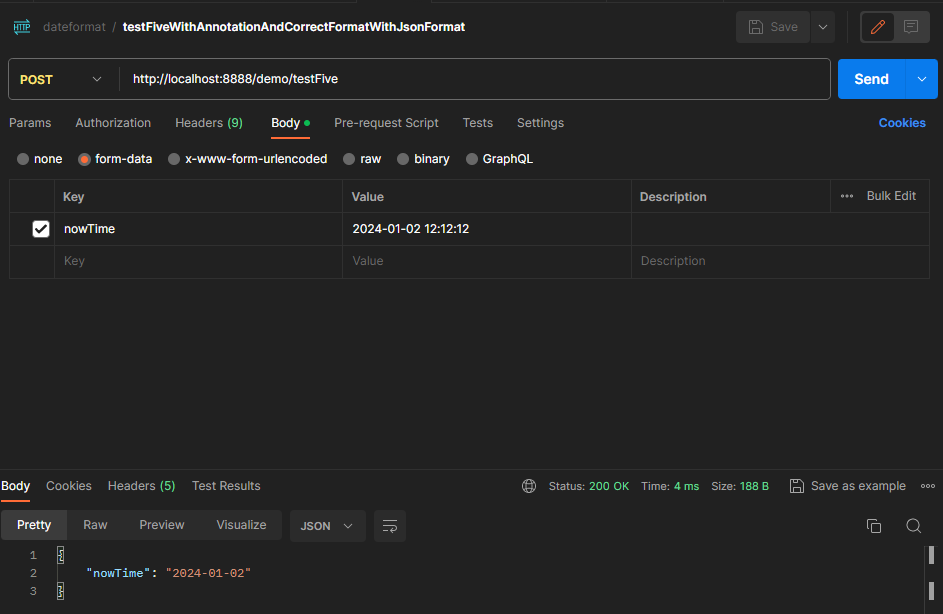
没有@ResponseBody返回值的参数也是正确解析了的。
case7:
1
2
3
4
5
| @PostMapping("/testSix")
public DemoOnlyResponse testSix(@RequestBody DemoOnlyResponse demoTest) {
System.out.println("demoTest = " + demoTest);
return demoTest;
}
|
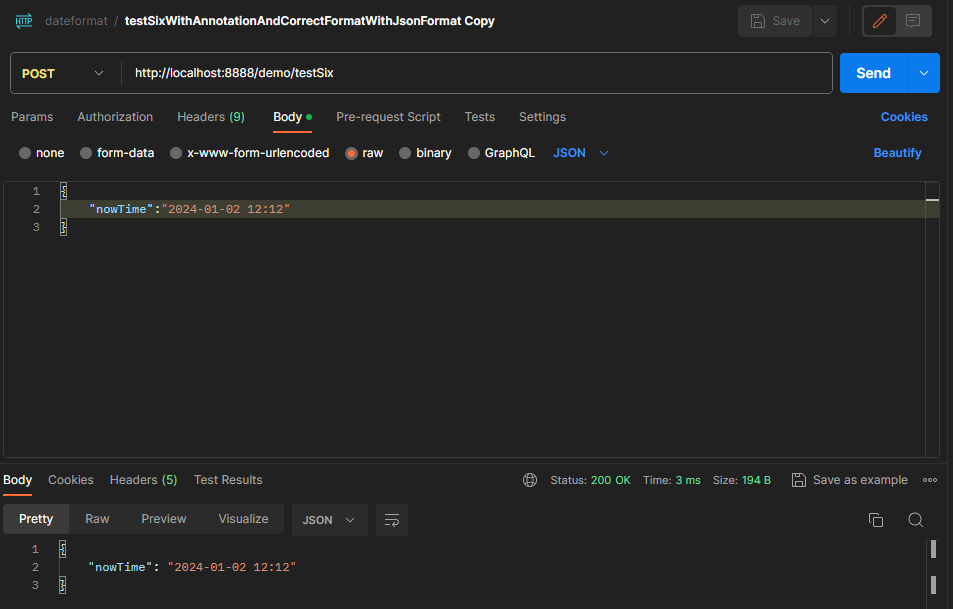
仅有@JsonFormat的话,也可以实现入参与出参的格式化。
使用@RequestBody 接受json参数时,如果不配置自定义格式的话,默认使用的格式是yyyy-MM-dd’T’HH:mm:ss.SSSZ。这个传入的参数也可以比默认的格式减少字段,比如实际传入:2025-01-01T14:22
参考链接
https://zhuanlan.zhihu.com/p/382657475